Eroona PowerPoint Template: A Versatile Tool for Polished Presentations
Crafting a presentation that resonates with an audience takes more than good content. It demands visual clarity, logical flow, and a design that supports your message without distracting from it. The Eroona - PowerPoint Template offers a structured yet flexible foundation for building such presentations. With 150 slides spread across five premade color schemes, this template is built for professionals, educators, marketers, and creators who need to move from concept to delivery quickly without sacrificing quality. Whether you are preparing a quarterly business review, a client pitch, an educational module, or a personal portfolio, Eroona provides the building blocks to turn ideas into impactful slides.
What Eroona Brings to Your Presentation Workflow
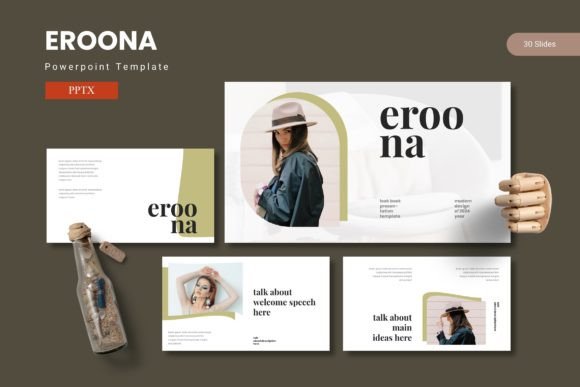
At its core, Eroona is a comprehensive PowerPoint template designed around master slides and handcrafted infographics. The package contains five separate PPTX files, each corresponding to a different color variation, with 30 slides per file. This structure means you can pick a palette that aligns with your brand or project theme and start working immediately. The template includes section break slides, gallery and portfolio layouts, drag-and-drop picture placeholders, and fully resizable, editable graphics. For anyone who regularly builds presentations, having these assets pre-assembled reduces repetitive formatting tasks and lets you concentrate on message development and data interpretation.
The template fits naturally into a broader content creation process. You might first gather research, outline key points, and decide on your narrative arc. Then, instead of staring at a blank slide, you open the Eroona file and choose layouts that match the purpose of each section—introduction, data analysis, case study, conclusion. Because the template uses master slides, any global changes (like font updates or color tweaks) propagate across all slides, maintaining consistency without manual adjustment. This approach works well for iterative projects: you can draft quickly, review with stakeholders, and refine design elements in a single pass.
Preparation Phase: Setting Up Your Visual Foundation
Before you dive into slide creation, spend a few minutes exploring the five color schemes included in the Eroona folder. Each scheme comes as a separate PPTX file, so you can open all five side by side and decide which one best suits your content. For a financial report, a blue or gray palette might convey professionalism; for a creative portfolio, a brighter accent could work better. Once you select a scheme, open its PPTX file and review the 30 slides to understand the layout options. The template includes section break slides, infographic-based data slides, and image-heavy gallery layouts. Identify which slide types you will need most and plan your structure accordingly.
During this prep stage, also gather any fonts and photos you intend to use. The template’s documentation includes a “Font & Photo Information” file, so check that your chosen typefaces are available or install them if needed. If you are collaborating with a team, share the selected PPTX file and a brief style guide (colors, fonts, image treatments) so everyone works from the same visual base. This upfront alignment prevents mismatched slides later.
During Creation: Efficient Slide Building and Customization
With your color scheme and layouts chosen, begin populating slides. The Eroona template uses drag-and-drop picture placeholders, so inserting images is as simple as dragging a photo onto the designated area. All graphics, including icons, charts, and infographic elements, are resizable and editable—no need to fuss with locked objects. Use the built-in infographic slides to present data visually: instead of a plain bullet list, convert key metrics into a flow chart or comparison diagram. The handcrafted infographics are based on master slides, meaning you can duplicate and tweak them without breaking the underlying design.
A practical workflow is to work through your outline, slide by slide, using the Eroona layouts as starting points. For a business proposal, start with a title slide, then a section break, then an agenda slide, followed by a few data slides, a timeline, and a client testimonial slide from the gallery layouts. Because the template provides 30 slides per color scheme, you have room to expand without running out of appropriate layouts. If you need more slides, simply duplicate an existing layout and adjust the content. The master slide structure ensures that any font or color updates you make globally will apply to the new slides as well.
Post-Project: Review, Polish, and Reuse
Once your presentation is built, use the final review phase to check visual consistency. Because Eroona relies on master slides, you can quickly test different color schemes by copying content from one PPTX file to another—though it is often easier to finalize within your chosen scheme. Check that all picture placeholders contain appropriate images and that graphics are scaled correctly. The template’s section break slides are useful for creating natural pauses during a live presentation; ensure they are placed where you want to transition between major topics.
After your presentation is delivered, save the file as a master template for future use. For recurring presentations (monthly reports, regular client updates), you can reuse the Eroona file by replacing content while preserving the design. This long-term reuse pays off quickly, especially if you maintain a library of templated slides for common needs like project timelines, team introductions, or KPI dashboards.
Integration with Tools, Platforms, and Teams
The Eroona template is distributed as a standard PPTX file, which means it works seamlessly with Microsoft PowerPoint (desktop and online) and most alternative presentation software like Google Slides or Keynote (though some advanced master-slide features may need adjustment). For teams collaborating remotely, upload the PPTX file to a shared drive or cloud service. Because the template uses editable vector graphics, you can export individual slides as images or PDFs for use in reports, social media, or handouts without losing quality.
If you use other design tools like Canva, Adobe Illustrator, or Figma for assets, you can import those graphics into the Eroona slides. The template’s resizable placeholders easily accommodate external images, infographics, or branded illustrations. For data-driven presentations, link Excel charts directly into the PowerPoint file—the clean layout of Eroona’s data slides accommodates such linked objects well, and the infographic elements can supplement raw numbers with visual context.
When working with external contributors (freelance designers, copywriters, or subject matter experts), sharing the Eroona file along with a brief on which layouts to use ensures everyone stays on the same visual page. The five color variations make it easy to assign different color codes for different projects or departments, reducing confusion.
Practical Implementation Tips for Maximum Efficiency
- Start with the Readme file. The “Readme First” document inside the Eroona folder lists font requirements, photo credits, and usage notes. Skipping this can lead to missing fonts or broken placeholders.
- Customize global settings early. Change the default font, color palette, and background in the master slide view before adding content. This ensures every new slide inherits your preferences.
- Use section breaks strategically. If your presentation has five main parts, insert section break slides between them. This gives your audience a visual rest and helps you keep track of your place.
- Leverage the gallery and portfolio slides for credibility. Showcase client logos, team photos, or product shots in the gallery layouts. These slides break up text-heavy sections and build trust.
- Keep infographics focused. The handcrafted infographics are best used for one key insight per slide. Avoid cramming multiple data points into a single diagram—instead, spread them across several infographic slides to maintain clarity.
- Test in presentation mode. After editing, run through the slides in full-screen mode to catch any alignment issues, font rendering differences, or placeholder errors. This final check takes only a few minutes but prevents embarrassing glitches.
Consistency, Quality Control, and Long-Term Use
One of the biggest challenges in presentation design is maintaining visual consistency across dozens of slides. Eroona solves this through its master-slave architecture: fonts, colors, and background elements are controlled from the master slide, so you never accidentally end up with two different heading styles. For quality control, set a checklist before finalizing: check that all images are high resolution, that text fits within placeholders, and that color contrast meets accessibility standards. Because the template includes five color schemes, you can also run contrast checks across schemes to ensure your content works for all viewers.
For long-term use, treat the selected Eroona file as a core template for a specific type of presentation—say, monthly reports for one department or investor decks for a startup. Over time, you will build a library of frequently used slide layouts within the file, which you can duplicate and repurpose. This approach reduces the time spent on formatting from hours to minutes. When your brand style evolves, you can update the master slide in the Eroona file rather than redesigning every slide from scratch.
Final Observations for Everyday Users
The Eroona PowerPoint Template is not a magic bullet—it is a tool that works best when paired with a clear process. Its real value lies in removing the friction of starting from zero and maintaining a professional look without constant manual adjustments. For marketers preparing campaign updates, educators structuring course modules, or freelancers showcasing portfolios, this template provides a structured canvas that respects your time. By integrating it into your preparation, creation, and review workflows, you can produce presentations that communicate clearly and look deliberately designed—even when you had only an hour to build them.
If you regularly need to adapt presentations for different audiences or color schemas, having the five premade variations at hand allows you to switch between a conservative palette for board meetings and a more dynamic one for creative pitches. The folder structure, with separate PPTX files per color and a centralized Readme, keeps your assets organized. Ultimately, Eroona helps you share your ideas with confidence by handling the visual heavy lifting so you can focus on what matters: the message itself.