How Table Stool Hand Drawing Enhances Visual Communication and Design Strategy
Hand-drawn illustrations have always carried a distinct quality that purely digital or photographic imagery cannot replicate. They bring warmth, personality, and clarity to visual communication. Among the many illustration styles available, a Table Stool Hand Drawing stands out as a remarkably versatile asset. It is not merely a decorative element but a functional tool that can support strategic goals across branding, marketing, education, and operational communication. Understanding what this illustration offers, when to use it, and how to deploy it intentionally can make the difference between a cluttered visual identity and one that resonates with clarity and purpose.
What Table Stool Hand Drawing Represents in Visual Communication
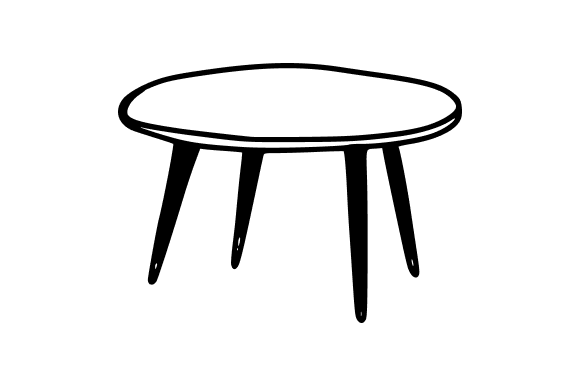
At its core, a Table Stool Hand Drawing is a hand-rendered depiction of a table and stool arrangement. It may appear simple, but its value lies in its ability to convey concepts of stability, gathering, work, rest, and everyday life. In design contexts, such an illustration serves as a visual metaphor for collaboration, planning, or focused activity. Whether you are designing for a coffee shop brand, a co-working space, a productivity app, or an educational resource, the table and stool motif grounds abstract ideas in something familiar and tangible.
For entrepreneurs and small business owners, this illustration style offers a way to communicate without relying on stock photography or generic icons. It feels crafted rather than assembled. The hand-drawn nature signals authenticity and care, which can strengthen trust with audiences who are increasingly skeptical of overly polished corporate imagery. Professionals and educators can use it to break down complex information into relatable visual anchors. When you choose a Table Stool Hand Drawing, you are not just selecting an image; you are choosing a tone and a narrative approach.
Strategic Value of Table Stool Hand Drawing for Branding and Positioning
Branding is about creating a consistent, memorable identity. Visual elements play a central role in that process. A Table Stool Hand Drawing can become a signature element in your brand toolkit, especially if your business revolves around hospitality, workspaces, community events, or educational content. The illustration can be adapted across different media without losing its character because the hand-drawn style retains its integrity whether scaled down for a sticker or enlarged for a poster.
From a positioning standpoint, using a hand-drawn table and stool communicates approachability. It suggests that your brand values human connection, simplicity, and thoughtful design. This can be particularly effective for businesses targeting adults aged 25 to 50 who are looking for genuine experiences rather than mass-market appeal. A table stool hand drawing placed on a presentation slide, a website hero section, or a product label creates an instant visual cue that the content or offering is meant to be useful, grounded, and accessible.
When you receive the files in SVG, EPS, JPG, and Transparent PNG formats, you gain flexibility. The SVG and EPS formats allow for scaling without loss of quality, which is critical for print design where resolution matters. The transparent PNG format is ideal for digital use where you need to overlay the illustration on different backgrounds. This range of formats ensures that the illustration can be integrated into your workflow regardless of the software or medium you are using.
Practical Applications Across Design and Communication Channels
The versatility of a Table Stool Hand Drawing becomes apparent when you consider the range of use cases. In print design, it can work as a central image for flyers, brochures, menus, or invitations. A hand-drawn table and stool on a café menu, for example, evokes a sense of place and craftsmanship. In web design, it can serve as a hero illustration, a feature graphic, or an icon within a navigation system. Because the style is clean and not overly detailed, it loads quickly and scales well on different screen sizes.
For presentation design, the illustration can be a powerful visual aid. Instead of using bullet points to list the steps of a planning process, you can place a Table Stool Hand Drawing alongside key points to reinforce the message that the content is about foundational work, collaboration, or structured thinking. Presenters in educational settings or business meetings have found that such illustrations reduce cognitive load and help audiences retain information longer.
Promotion design also benefits from this illustration. Social media graphics, email headers, and ad banners can all incorporate the table and stool image to create a consistent visual theme. For infographics, the drawing can anchor a section about productivity habits, workspace setup, or community building. The hand-drawn quality makes the infographic feel less clinical and more engaging, which can improve sharing and recall.
Even for sticker design, a Table Stool Hand Drawing works well because the subject matter is universal. Stickers used for branding, packaging, or giveaway items often perform better when they depict something relatable. A table and stool illustration on a sticker placed on a laptop or notebook can subtly reinforce your brand message every time it is seen.
Planning and Decision-Making Guidance for Using the Illustration
Before you incorporate a Table Stool Hand Drawing into any project, take a moment to clarify your goals. Ask yourself what you want the illustration to communicate. Is it about stability and foundation? Is it about gathering and community? Is it about focused work or creative thinking? The answer will guide how you position the illustration within the overall design. For instance, if your goal is to communicate productivity, place the table and stool in a clean, uncluttered setting with minimal additional elements. If your goal is to evoke warmth and hospitality, consider pairing the drawing with soft colors and organic textures.
Also consider your audience. Adults in their 20s and 30s may respond differently to a hand-drawn style compared to those in their 40s and 50s. However, research in visual communication suggests that hand-drawn illustrations generally convey sincerity and reduce perceived commercial intent. This can be an advantage when you are trying to build trust rather than push a hard sell. If your audience includes educators or professionals who value clarity, the simple form of a table and stool can serve as a reliable visual shorthand.
File format selection matters for practical execution. If you are working on a print project, use the EPS or SVG format to maintain vector quality. For digital projects where the illustration will be placed on varied backgrounds, the transparent PNG format saves time and preserves the hand-drawn aesthetic. The JPG format is suitable for web use where file size needs to be smaller, but be mindful that compression can sometimes soften the hand-drawn lines. Test the illustration in context before finalizing.
Risks of Using Table Stool Hand Drawing Without Clear Intent
No illustration works well in every context. Using a Table Stool Hand Drawing without a clear strategic purpose can create confusion or dilute your message. For example, if your brand identity is sleek, high-tech, and futuristic, a hand-drawn table and stool may feel out of place unless it is used as a deliberate contrast. Similarly, if the illustration is placed in a cluttered design with competing visual elements, its meaning can become lost. The risk is not in the illustration itself but in how it is deployed.
Another risk is inconsistency. If you use the Table Stool Hand Drawing in one campaign but then switch to a completely different visual style in the next, your audience may struggle to form a coherent mental image of your brand. Consistency in visual language builds recognition. If you decide to use this illustration as part of your brand toolkit, commit to it across multiple touchpoints for a sustained period. That does not mean you cannot evolve your visual style, but changes should be intentional and gradual.
There is also the risk of overuse. A single illustration repeated too often across too many channels can become stale. To avoid this, think of the Table Stool Hand Drawing as one element in a broader visual system. Pair it with other hand-drawn elements, typography, and color schemes that complement but do not compete with it. This keeps the overall design fresh while maintaining consistency.
Long-Term Value and Strategic Positioning
When used thoughtfully, a Table Stool Hand Drawing can contribute to long-term brand equity. Visual assets that are versatile and recognizable become part of how your audience remembers you. The hand-drawn style, in particular, tends to age well because it does not rely on trends that quickly become dated. A vector illustration from a decade ago can still feel relevant today if the design is clean and purposeful.
For small business owners and entrepreneurs, investing in high-quality illustration files like those provided in SVG, EPS, JPG, and Transparent PNG formats is a practical decision. These files can be repurposed across multiple projects without needing to commission new artwork each time. Over the course of a year, that can save both time and budget while ensuring visual consistency across print, web, presentation, and promotional materials.
Educators and professionals can also benefit from the long-term utility of such illustrations. A hand-drawn table and stool can be used in slide decks, handouts, online course materials, and worksheets. Because the subject is neutral and widely understood, it does not distract from the content but rather supports it. Over time, learners may come to associate the illustration with your teaching style, creating a subtle but valuable connection.
Making the Decision to Use Table Stool Hand Drawing Intentionally
The decision to use a Table Stool Hand Drawing should be grounded in your specific context. Consider your brand personality, your audience, your medium, and your message. If the illustration aligns with all four, it can become a powerful asset. If it is chosen simply because it looks nice, without consideration for fit, it may not deliver the results you expect.
Start by mapping out where the illustration will appear. Create a list of touchpoints: website, social media, print materials, presentations, stickers, infographics, and anything else relevant to your work. For each touchpoint, note the goal of the communication and how the illustration can support that goal. This exercise alone will prevent random use and ensure that every deployment of the Table Stool Hand Drawing serves a purpose.
Also consider the emotional tone you want to set. Hand-drawn illustrations tend to evoke feelings of warmth, authenticity, and creativity. If that aligns with your brand voice, the illustration will amplify that tone. If your brand voice is formal, authoritative, or technical, you may still use the illustration but in a more restrained way, perhaps as a supporting visual rather than the main focus.
Finally, test the illustration with a small segment of your audience before rolling it out broadly. Show it in context and gather feedback. Does it communicate what you intend? Does it feel appropriate for the medium? Does it stand out without overwhelming other elements? These questions will help you refine the use of the Table Stool Hand Drawing before you commit to it across all channels.
Practical Examples of Effective Use
A local co-working space used a Table Stool Hand Drawing on their website as the hero image for their "About" page. The illustration was paired with text about community and collaboration. Visitors reported feeling that the space was welcoming and grounded. The same illustration was then used on printed brochures and social media headers, creating a cohesive brand identity that set the space apart from competitors who relied on photos of empty desks.
An educational publisher integrated a Table Stool Hand Drawing into their workbook series for adult learners. Each chapter began with the illustration alongside a short quote about learning and growth. Readers responded positively, noting that the hand-drawn element made the material feel less intimidating. The publisher later used the same illustration in promotional materials, which helped the series develop a recognizable visual identity.
A freelance productivity coach used the illustration in presentation slides for a workshop on time management. The table and stool represented the foundation of a structured daily routine. Attendees remembered the visual and referenced it in follow-up conversations. The coach then licensed the illustration for use on her website and email templates, creating a consistent visual thread across her services.
Final Observations on Strategic Use
The value of a Table Stool Hand Drawing lies not in the illustration itself but in how it is integrated into a larger strategic framework. It is a tool, not a solution. Used with intention, it can enhance communication, support branding, improve learning outcomes, and create emotional resonance. Used without thought, it becomes visual noise. The difference depends entirely on the decisions you make before you place it on the page or screen.
As you evaluate whether and how to use this illustration, focus on alignment. Does it fit your goals? Does it fit your audience? Does it fit your medium? Does it fit your message? If the answer to these questions is yes, then a Table Stool Hand Drawing can become a reliable and long-lasting element of your visual strategy. The file formats provided—SVG, EPS, JPG, and Transparent PNG—give you the flexibility to apply it across nearly any project. The deciding factor is how thoughtfully you choose to use it.