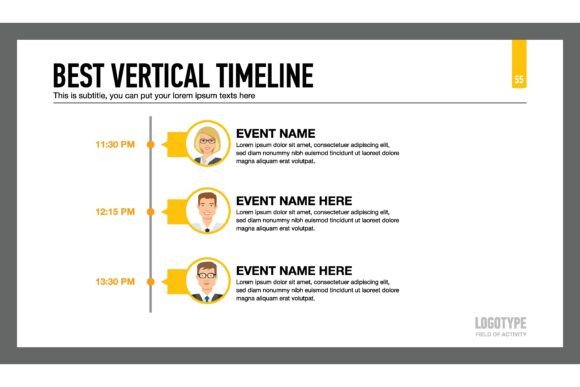
Bringing Stories to Life: The Power of Editable Infographic Templates with Vertical Timelines and Character Portraits
In an age where information bombards us from every direction, the ability to present data clearly and memorably has become an essential skill. Whether you are a marketer mapping a customer journey, a teacher explaining a historical sequence, or a project manager laying out a roadmap, the format you choose can make or break your message. Enter the editable infographic template — a versatile, pre-designed framework that transforms raw information into a visual narrative. Among the most compelling of these is the vertical timeline infographic, especially when it is enriched with detailed character portraits. This format does not just display facts; it tells a story with a human heart.
This article explores what makes these templates so powerful, how they work, and why they have become a go-to tool for communicators across industries. We will walk through their purpose, practical applications, and the creative freedom they offer. By the end, you will understand not only how to use one but also how to make it uniquely yours.
What Is a Vertical Timeline Infographic Template?
At its core, a vertical timeline infographic is a visual arrangement of events, steps, or milestones arranged sequentially along a central line running from top to bottom. Unlike a horizontal timeline, which often requires more horizontal space and can feel less natural on screens and printed pages, the vertical orientation aligns with how we scroll and read. It is intuitive, space-efficient, and easy to follow.
Think of it as a visual path that guides the reader from a starting point to an endpoint, with each stop along the way offering a clear, digestible piece of information.
What sets a truly engaging template apart is the inclusion of character portraits — illustrated or photographic representations of the people involved in the story. When a timeline maps the career of a leader, the evolution of a brand, or the steps of a community project, placing a face next to each milestone creates an immediate emotional connection. The reader is not just absorbing data; they are meeting the people behind it.
Key Components of a High-Quality Template
- Central vertical line or axis: The backbone of the timeline, often styled with line weight, color, or dotted patterns to guide the eye.
- Milestone nodes: Circles, icons, or markers at key points along the timeline to indicate each step or event.
- Text blocks: Concise descriptions, dates, and headlines placed beside or above each node.
- Character portraits: Illustrated or photographic portraits that add personality and context.
- Supporting visuals: Icons, arrows, background shapes, and color palettes that reinforce the theme.
- Editable layers: The ability to change every element — text, colors, images, and layout — without breaking the design.
Why Editable Templates Matter: Freedom Meets Structure
The beauty of an editable infographic template lies in the balance between a ready-made framework and creative flexibility. Instead of starting from a blank canvas, you benefit from a professional layout designed by someone who understands visual hierarchy, readability, and aesthetic appeal. Yet, you are not locked into a rigid format. Every component — from the font size to the portrait style — can be tailored to your specific needs.
This is particularly valuable for non-designers. A small business owner, a teacher, or a nonprofit coordinator may not have the time or budget to hire a graphic designer. With an editable template, they can produce a polished, high-impact visual in hours instead of days. For experienced designers, the template serves as a springboard, allowing them to focus on creative variations rather than foundational structure.
Real-World Relevance: Where These Templates Shine
- Business presentations: Map a company's growth from startup to industry leader, with founder portraits at key inflection points.
- Educational materials: Illustrate a historical timeline, scientific process, or literary character development in a memorable way.
- Marketing and branding: Showcase a brand's evolution, product launches, or customer journey with relatable user personas.
- Personal storytelling: Create a family history, travel diary, or personal development journey with real or stylized portraits.
- Community and nonprofit work: Highlight the milestones of a community initiative, pairing each step with portraits of the people who drove it.
Adding a Human Touch: The Power of Character Portraits
Data without context can feel cold. Numbers, dates, and milestones gain meaning when they are associated with real people. A vertical timeline enriched with character portraits does something that a standard chart or list cannot: it invites empathy. When a reader sees a face, they instinctively want to know more. Who is this person? What did they do? Why does it matter?
In a business context, this humanization builds trust. A timeline showing the journey of a family-run company becomes more compelling when each generation's founder is pictured. In education, a timeline of scientific discovery becomes a story of human curiosity and persistence when paired with portraits of the scientists. Even in personal projects, adding portraits turns a sequence of events into a legacy.
Clarifying a Common Misunderstanding
Some assume that adding portraits makes an infographic less professional or too "illustrative" for formal use. In reality, the opposite is true. A well-designed character portrait — whether a clean illustration, a high-quality photograph, or a stylized vector — adds warmth without sacrificing clarity. The key is consistency: use a uniform style for all portraits, maintain appropriate sizing, and place them in harmony with the timeline structure. When done right, portraits elevate the infographic from a data display to a narrative experience.
How to Customize Your Template: A Step-by-Step Approach
Immersing yourself in a creative adventure with a meticulously crafted template means you have permission to experiment. Here is a practical guide to making the template your own:
Step 1: Define Your Story Arc
Before you edit a single element, map out the key milestones. What is the beginning, middle, and end of your story? Identify 5–10 core points that will become the nodes on your timeline. Each point should have a clear date, a concise headline, and a short description. This foundation will guide every visual choice.
Step 2: Choose Your Color Palette and Fonts
Most templates come with a default palette, but editing is where the magic happens. Pick colors that align with your brand, your topic, or the mood you want to convey. Warm tones like amber and rust work well for heritage stories; cool blues and teals suit tech or health topics. Fonts should be legible at small sizes — a clean sans-serif for body text and a distinctive typeface for headlines.
Step 3: Curate or Create Character Portraits
You have options here. You can use real photographs (with permission), commission custom illustrations, or use high-quality stock portraits that match the demographics and style of your story. The template likely includes portrait placeholders — simply swap them out. Ensure each portrait is cropped consistently and positioned to face into the timeline, drawing the reader's eye toward the content.
Step 4: Refine the Text
Keep descriptions tight. Aim for one to three sentences per milestone. Use strong for key terms and italics for emphasis when appropriate. A vertical timeline is a visual tool — text that overwhelms the space defeats its purpose. Edit ruthlessly.
Step 5: Adjust Layout and Flow
Some templates alternate text blocks left and right of the timeline to create rhythm. Others keep all text on one side for a cleaner look. Experiment with what feels right for your content. Add supporting icons, arrows, or background shapes to guide the eye naturally from top to bottom.
Practical Relevance for Modern Life and Work
In today's fast-paced environment, attention is scarce. A vertical timeline infographic with portraits cuts through the noise by offering a visual path that is easy to scan and emotionally engaging. For remote teams, it serves as a shared narrative tool that aligns everyone around a common history or goal. In education, it helps visual learners grasp sequences and relationships. For content creators, it is a shareable asset that performs well on social media, blogs, and presentations.
Consider a startup pitch. Instead of listing funding rounds and product launches in bullet points, imagine presenting a vertical timeline with portraits of the founding team at each pivotal moment — the garage where it began, the first customer, the key hire, the breakthrough. The visual story is far more persuasive than a spreadsheet.
Beyond Business: Personal and Creative Uses
- Family history projects: Map your family tree across decades with portraits of ancestors and living relatives.
- Travel journals: Create a timeline of your adventures with self-portraits at each destination.
- Fitness or wellness journeys: Track progress with milestones and photos that document transformation.
- Creative portfolios: Showcase your artistic evolution, pairing each phase with a self-portrait or character illustration.
Common Pitfalls and How to Avoid Them
Even the best template can fall flat if not used thoughtfully. Here are a few pitfalls to watch out for:
- Overcrowding: Jamming too many milestones makes the timeline unreadable. Limit nodes to what is essential, and use sub-timelines or supplemental visuals for additional detail.
- Inconsistent portrait styles: Mixing photographs with illustrations or varying sizes breaks visual harmony. Stick to one style throughout.
- Weak hierarchy: Make sure dates, headlines, and descriptions are visually distinct. Use font weight and spacing to create clear layers.
- Ignoring mobile viewing: Many vertical timelines are viewed on phones. Test your design at small screen sizes to ensure text remains legible and portraits are visible.
Conclusion: Unlock Your Creative Adventure
The editable infographic template of a vertical timeline with character portraits is more than a design tool — it is a storytelling engine. It gives you the structure to present information clearly and the freedom to infuse it with personality. Whether you are documenting a business journey, teaching a complex topic, or preserving a personal legacy, this format helps your audience see not just what happened, but who made it happen.
Set your artistic impulses free. Experiment with color, portrait style, and layout. Let each milestone breathe, and let each face tell its part of the story. By the time you place the final node at the bottom of your timeline, you will have created something that is not only informative but deeply human. And that is the kind of content people remember.
Ready to begin? Open that template, drag in your first portrait, and start building your visual narrative today.