The Complete Guide to Designing Mobile Course Vertical Flyers with Vector Templates
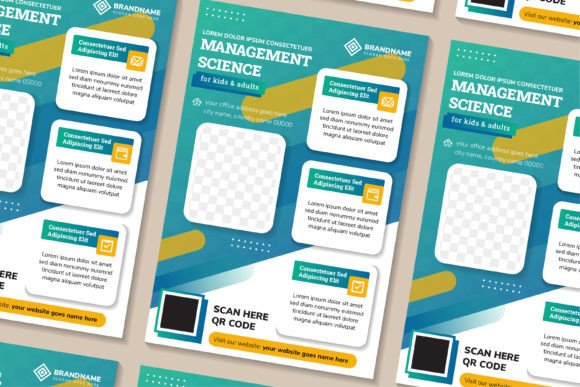
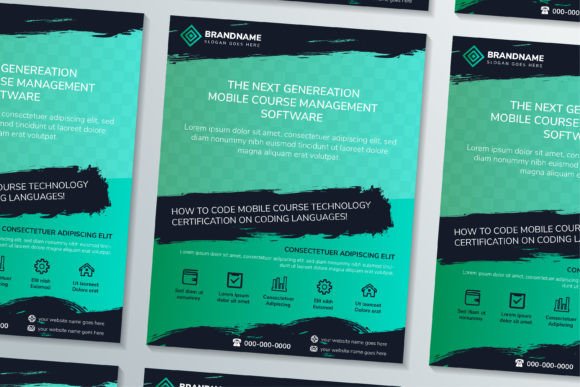
Producing compelling visual content for mobile course management software requires more than just good copy. The layout, color palette, resolution, and format all contribute to how an audience perceives a training program, educational product, or corporate presentation. Among the many options available to designers and marketers, the Mobile Course Vertical Flyer has emerged as a versatile asset that bridges the gap between promotional material and functional documentation. Combining a green and blue gradient aesthetic with editable vector components, this type of flyer template supports everything from classroom announcement posters to annual training reports.
Understanding what makes these flyers effective and how to adapt them to different contexts can save time, improve brand consistency, and enhance audience engagement. This article explores the defining characteristics of mobile course vertical flyer designs, their practical applications across industries, and the technical considerations that ensure professional results.
Core Characteristics of a Mobile Course Vertical Flyer
A well-crafted mobile course vertical flyer is built around readability, visual hierarchy, and adaptability. Because it is intended for display on screens as well as print, the layout must remain clear at different sizes. Vertical orientation aligns with mobile viewing habits and standard A4 document proportions, making it a natural choice for course-related materials. Key features that define this template category include:
- Gradient color schemes: The combination of green and blue gradients is especially effective for educational and technology-related content. Green conveys growth, learning, and natural progression, while blue adds a layer of professionalism, trust, and digital fluency. Together, these colors create a modern and approachable visual tone.
- Vector-based graphics: Every element in the template is built using vector paths rather than pixel-based images. This ensures that shapes, icons, and text remain crisp at any scale, from a smartphone preview to a large poster print at 300dpi.
- Editable text, shapes, and colors: Templates designed for mobile course management software allow users to modify every component. Changing a headline, adjusting the opacity of a shape, or swapping the gradient direction does not require advanced design skills, making the template accessible to non-designers.
- Photo collage spaces: Pre-sized placeholders for images enable the inclusion of screenshots, team photos, or product shots. This is especially valuable when showcasing course interfaces, instructor profiles, or student engagement visuals.
- Well-organized layers: Professional templates label each layer logically, reducing the time needed to locate and edit specific elements. This organization is critical when working under tight deadlines or when multiple team members need to collaborate on the same file.
These characteristics are not arbitrary. They reflect the needs of professionals who must produce consistent, high-quality materials without starting from scratch each time. The Mobile Course Vertical Flyer format, when executed well, becomes a repeatable asset that supports both internal communication and external marketing.
Why Green and Blue Gradients Work for Course Management
Color psychology plays a significant role in how audiences perceive educational content. Green is associated with knowledge, harmony, and renewal. Blue evokes trust, structure, and technology. When these two colors are blended into a seamless gradient, the visual result communicates that the course offering is both innovative and reliable. This is particularly relevant for mobile course management software flyer brochure templates that need to appeal to decision-makers, trainers, and learners simultaneously.
The gradient itself adds depth without relying on heavy graphical elements. A flat design can sometimes feel static, whereas a gradient introduces a sense of movement and modernity. In the context of a flyer promoting a course or training program, this subtle visual cue suggests progress and forward thinking. Whether the flyer is used for a corporate annual report, a university workshop, or a software product launch, the green-blue gradient aligns with themes of development and digital transformation.
Moreover, gradient backgrounds work well with white or light-colored text, improving readability. The contrast between the gradient and overlaid content can be adjusted by modifying the saturation or adding a semi-transparent overlay. This flexibility allows the same template to serve both information-dense documents and visually driven posters.
Practical Applications Across Different Sectors
One of the strengths of the Mobile Course Vertical Flyer is its adaptability to various use cases. Rather than being limited to a single industry, the template structure supports multiple communication goals:
Educational Institutions and Training Centers
Schools, universities, and vocational training providers often need to announce new courses, showcase curricula, or summarize annual training outcomes. A vertical flyer with space for a photo collage can feature campus images, instructor bios, and student testimonials. The editable text fields allow each department to customize the flyer for their specific program without redesigning the layout. The green and blue gradient reinforces the institution’s brand while maintaining a professional appearance suitable for both digital distribution and physical posting.
Corporate Learning and Development Teams
Internal training departments frequently produce materials for employee onboarding, compliance training, or leadership development. Using a mobile course management software flyer brochure template, L&D teams can create consistent one-page summaries for each course offering. The vector graphics ensure that company logos and icons remain sharp, while the 300dpi resolution allows for high-quality printing if the flyers are included in annual report packets or employee handbooks. The photo collage feature can be used to display screenshots of the learning management system interface, making the material more concrete for learners.
Software Vendors and EdTech Companies
Companies that develop course management software need to communicate product features to potential buyers. A vertical flyer can serve as a leave-behind at conferences, a download on a product page, or a slide within a sales presentation. The editable vector layouts enable the marketing team to quickly update pricing, feature lists, or case study highlights without engaging a graphic designer. The green-blue gradient aligns with the tech-forward image many software companies aim to project.
Freelancers and Independent Creators
Hobbyists, researchers, and independent educators who create their own courses also benefit from a ready-made template. The time saved on layout design can be redirected to content development. The ability to edit shapes and colors means the flyer can be customized to match a personal brand or a specific course theme. Even without formal design training, a user can produce a polished flyer that competes with materials from larger organizations.
Technical Considerations: Resolution, Format, and Vector Quality
Not all flyer templates are created equal. The technical specifications of a Mobile Course Vertical Flyer directly impact its usability and final output quality. Three factors deserve special attention:
300dpi Resolution
Dots per inch (dpi) determines the sharpness of printed materials. A template built at 300dpi ensures that text, lines, and gradients appear smooth and professional when printed on standard office or commercial printers. Lower resolution templates (72dpi or 150dpi) may look acceptable on screen but often appear pixelated in print. For annual reports, brochures, and posters intended for physical distribution, 300dpi is the industry standard. The Mobile Course Vertical Flyer templates described here meet this threshold, making them suitable for both screen and print use.
Vector vs. Raster Graphics
All graphics in a professional template should be 100% vector based. Unlike raster images (JPEGs or PNGs), vector graphics use mathematical paths to define shapes. This means they can be scaled up to billboard size or down to a thumbnail without losing clarity. Icons, decorative elements, and even text paths in vector format retain their sharp edges regardless of zoom level. When a template claims to include vector graphics, it is a guarantee that the design will not degrade during resizing or editing.
File Format Variety
The availability of multiple file formats increases flexibility. A typical download package includes Ai, EPS, JPG, and SVG versions of the template. Each format serves a different purpose:
- Ai (Adobe Illustrator): Best for users who need full control over every vector path, layer, and effect. Illustrator files preserve the original structure and allow for deep customization.
- EPS (Encapsulated PostScript): A widely compatible vector format that can be opened in many design applications, including CorelDraw and Affinity Designer. Useful for cross-platform workflows.
- JPG (Joint Photographic Experts Group): A high-resolution raster preview that can be used for quick mockups, email attachments, or web uploads when editing is not required.
- SVG (Scalable Vector Graphics): Ideal for web and mobile interfaces. SVG files can be embedded directly into HTML pages, used in app designs, or imported into presentation software without quality loss.
Having all four formats ensures that no matter what software or output channel the user works with, a suitable version is available.
Workflow: From Download to Final Production
Understanding how to use a Mobile Course Vertical Flyer template efficiently can streamline production. A typical workflow involves the following steps:
- Select the appropriate format: If you plan to edit extensively, open the Ai or EPS file. If you only need a static image for a quick preview, use the JPG. For web use, the SVG version is often the lightest and most compatible.
- Customize the text: Replace placeholder headlines, subheadings, and body copy with your own content. Because the text is editable, you can adjust font size, weight, and alignment to fit the length of your message. Most templates use standard fonts that can be substituted with your preferred typeface.
- Insert images: Use the photo collage spaces to add relevant visuals. Ensure your images are high resolution (at least 150dpi for print, 72dpi for screen) and that they match the color temperature of the green-blue gradient. A warm-toned photo may clash with the cool background, so consider applying a subtle filter if needed.
- Adjust colors and shapes: If your brand uses a specific shade of green or blue, modify the gradient accordingly. You can also change the opacity of overlays, resize decorative shapes, or remove elements that are not needed. The vector nature of the file makes these changes nondestructive.
- Export for output: For print, export as a high-resolution PDF or JPG at 300dpi. For digital distribution, save as a compressed PDF or PNG. If you need to embed the flyer in a web page, the SVG format is ideal because it preserves the vector quality and can be styled with CSS.
This workflow can be completed in under an hour once you are familiar with the template structure. For organizations that produce multiple flyers each quarter, the time savings accumulate rapidly.
Observations on Modern Layout Trends
The design of vertical flyers for mobile course management has evolved alongside changes in user interface aesthetics and information consumption habits. Current trends include the use of asymmetrical layouts, overlapping shapes, and transparent overlays. The Mobile Course Vertical Flyer often incorporates brush-like strokes or grunge textures to add a handcrafted feel, contrasting with the otherwise digital gradient background. This blend of organic and structured visuals reflects the dual nature of education itself: it is both a human experience and a digitally managed process.
Another notable trend is the integration of infographic-style elements. Icons, flowcharts, and graph placeholders allow the flyer to convey data without dense paragraphs. When presenting annual training statistics or course enrollment figures, a well-placed chart can communicate the same information as a paragraph of text but in a fraction of the space. The editable vector layouts in these templates make it easy to insert custom graphs or modify existing ones to match specific data points.
Watercolor and abstract background elements have also gained popularity. While the gradient provides a solid color foundation, overlaying translucent watercolor shapes adds depth and personality. This treatment is especially effective for creative fields, arts education, and courses that emphasize innovation. The key is to balance these decorative elements with enough whitespace to maintain readability.
Who Benefits Most from These Templates
While the broad audience for mobile course vertical flyers includes professionals, consumers, creators, educators, researchers, hobbyists, and business owners, certain groups derive particular value from the features described above:
- Marketing managers who need to produce consistent campaign materials across multiple course launches benefit from the editable templates and organized layers.
- Instructional designers who want to present course outlines in a visually appealing format can use the photo collage spaces to demonstrate module previews or learning paths.
- Small business owners who run their own training programs often lack dedicated design staff. A ready-made template with editable text and vector graphics empowers them to create professional materials independently.
- Freelance graphic designers can use the template as a starting point for client projects, reducing turnaround time while still delivering a unique final product after customizations.
- Nonprofit organizations that offer community education programs can adapt the flyer for grant reports, donor updates, or workshop announcements without incurring design costs.
Each of these users approaches the template with different goals, but the underlying need is the same: a reliable, high-quality layout that can be adapted quickly and produced in formats suitable for their specific output channel.
Considerations When Choosing a Template
Not every vertical flyer template will suit every project. Before downloading or purchasing a Mobile Course Vertical Flyer, consider the following factors:
Software compatibility: Ensure that the Ai or EPS files can be opened in your version of design software. Some templates use features that are only available in recent releases. If you work with open-source tools, the SVG format is often the most reliable cross-platform option.
Font licensing: Many templates use fonts that must be purchased separately. Check whether the font files are included or if links to download them are provided. Using a substitute font is possible but may alter the intended layout if the replacement has different metrics.
Image placeholders: The photo collage spaces are sized for common aspect ratios. Verify that your images will fit within these areas without requiring excessive cropping. If the template uses mock images, replace them entirely with your own content.
Color profile: For print projects, confirm that the template uses CMYK color mode rather than RGB. A CMYK file ensures that the green and blue gradients print as intended, without unexpected shifts in hue. For digital-only projects, RGB is perfectly acceptable.
Layer naming and structure: Open the file and inspect the layers panel before committing to a template. Well-organized layers with descriptive names (e.g., "Headline Text", "Background Gradient", "Photo Placeholder 1") save time. A disorganized file can be frustrating to work with, even if the visual design is appealing.
Real-World Examples of Effective Use
To illustrate the practical value of these templates, consider a few scenarios observed across different organizations. A mid-sized corporate training department used a Mobile Course Vertical Flyer template to create a quarterly summary of compliance course completions. The flyer included a photo collage of employees participating in training sessions, a green-blue gradient background that matched the company’s learning portal, and a bar graph showing completion rates. The editable vector layout allowed the team to update the data each quarter without redesigning the entire document. Over the course of a year, this approach saved approximately 40 hours of design time.
In another case, an independent course creator launched a series of online workshops on digital marketing. Using a similar template, they produced a flyer for each workshop, changing the headline, photo, and a few accent colors to differentiate the topics. The consistent layout helped build brand recognition across the series, while the individual tweaks kept each flyer fresh. The SVG format was used for social media posts, the JPG for email attachments, and the PDF for printing handouts. The template’s versatility eliminated the need to create separate assets for each channel.
A university outreach program adopted the template for their annual report on community education initiatives. The green-blue gradient was chosen to reflect the institution’s commitment to sustainability and digital innovation. Photo collage spaces featured images of participants in various workshops, while the vector icons highlighted key statistics such as number of courses offered, total participants, and partner organizations. The report was distributed as a printed brochure and as a downloadable PDF on the university website. Feedback from stakeholders indicated that the visual clarity of the flyer made the data easier to digest compared to previous text-heavy reports.
Final Thoughts on Template-Driven Design
Using a pre-designed template does not mean sacrificing originality. The best templates are those that provide a solid structural foundation while still leaving room for creative input. The Mobile Course Vertical Flyer with its green and blue gradient, vector layouts, and photo collage spaces exemplifies this balance. By starting with a professionally designed base, you can focus your energy on content quality, branding nuances, and audience engagement rather than fundamental layout decisions.
Whether you are announcing a new course, summarizing annual training achievements, or promoting a software platform, the vertical flyer format offers a familiar and effective canvas. The inclusion of multiple file formats ensures that you can use the same design across print, web, and presentation contexts without rework. And the emphasis on editable, vector-based components means that the template can grow with your organization, adapting to new messaging, updated branding, and evolving visual trends.
When selecting a template, remember to evaluate its technical specifications, layer organization, and color flexibility. A small investment in a well-constructed template can yield significant returns in terms of production efficiency, brand consistency, and professional presentation. The combination of thoughtful design and practical functionality makes the mobile course vertical flyer a valuable resource for anyone involved in course development, training communication, or educational marketing.
With the right template in hand, the process of creating polished, effective course materials becomes less about technical hurdles and more about the message you want to share. The green and blue gradient, the vector sharpness, and the adaptable layout all work together to support that message, ensuring that your audience sees not just a flyer, but a clear invitation to learn, engage, and grow.